Portfolii - AlertPass Inc.
From pain points to power: reinventing the recruiting workflow.
UX Researcher
4
4 Months
Setting the Scene
Recruiters spend hours navigating job portals—but too often, the tools don’t really support how they work. I set out to understand their challenges and reimagine what a recruiter-friendly platform could look like.
The Challenge we took on…
Our goal was simple: uncover the pain points recruiters face and translate them into actionable insights for more efficient, human-centered job portals.
How I Approached It
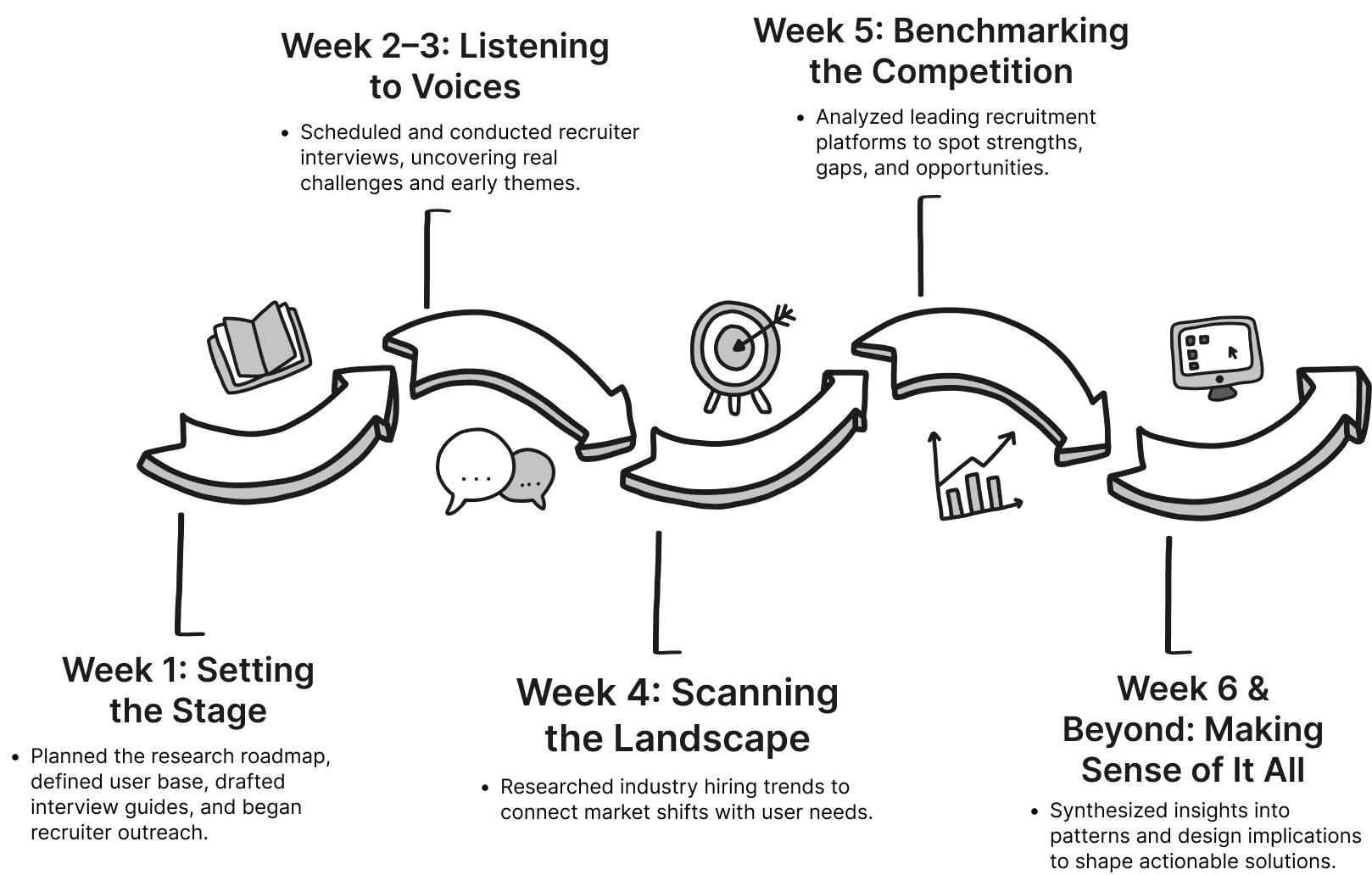
Over 6 weeks, I combined user interviews, market research, and competitor analysis to paint a full picture of recruiter workflows and frustrations.
Listen to User (Recruiters)
I spoke 1-on-1 with 7 professionals consisting of agency recruiters, internal recruiters, and hiring managers—each had some common and some unique challenges. Their stories revealed inefficiencies, frustrations, and untapped opportunities.

Peeling Back the Layers
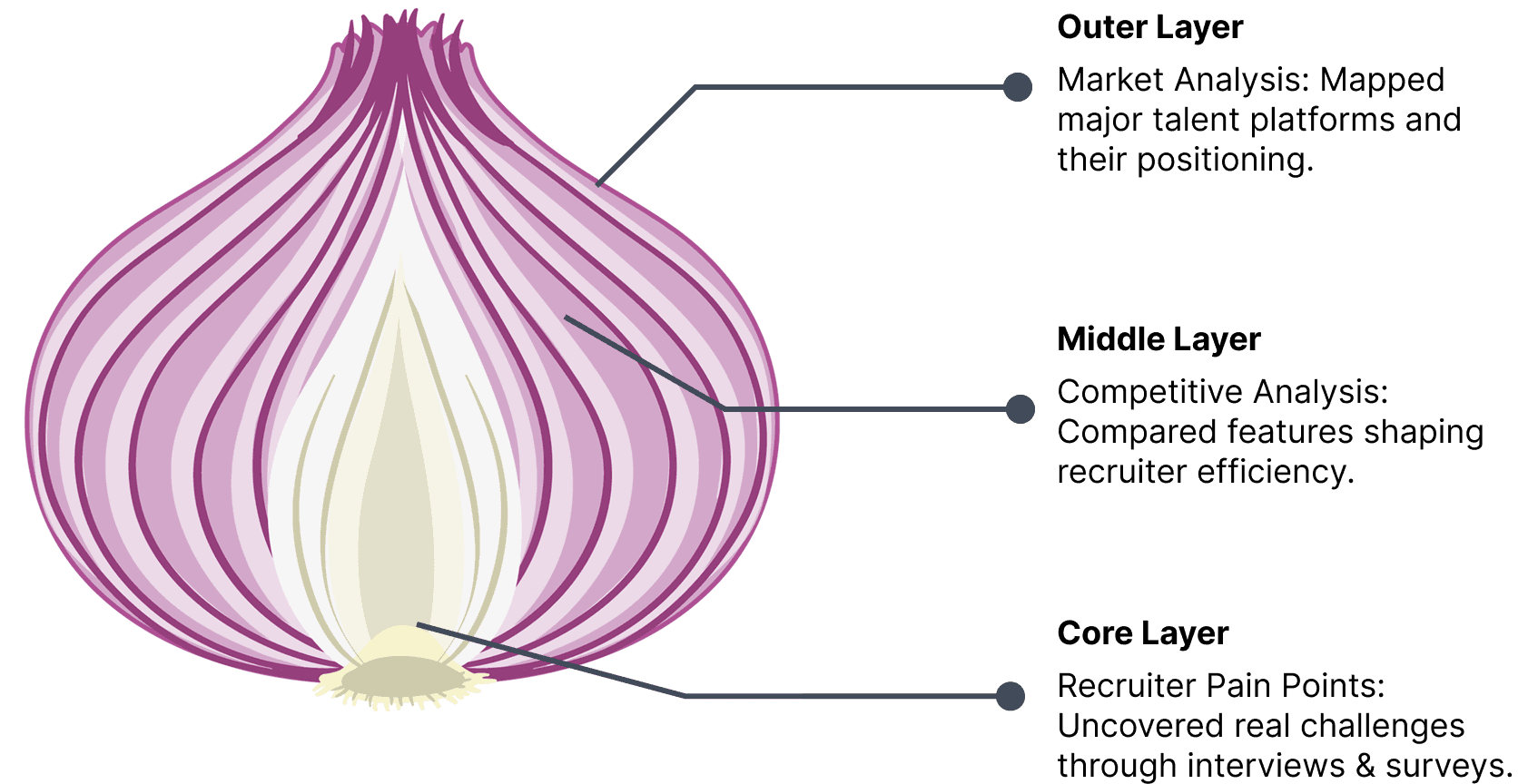
Using the Onion Research Framework, I moved from the big picture (market dynamics) to the core (recruiter pain points). This helped uncover both broad trends and deep, human frustrations.
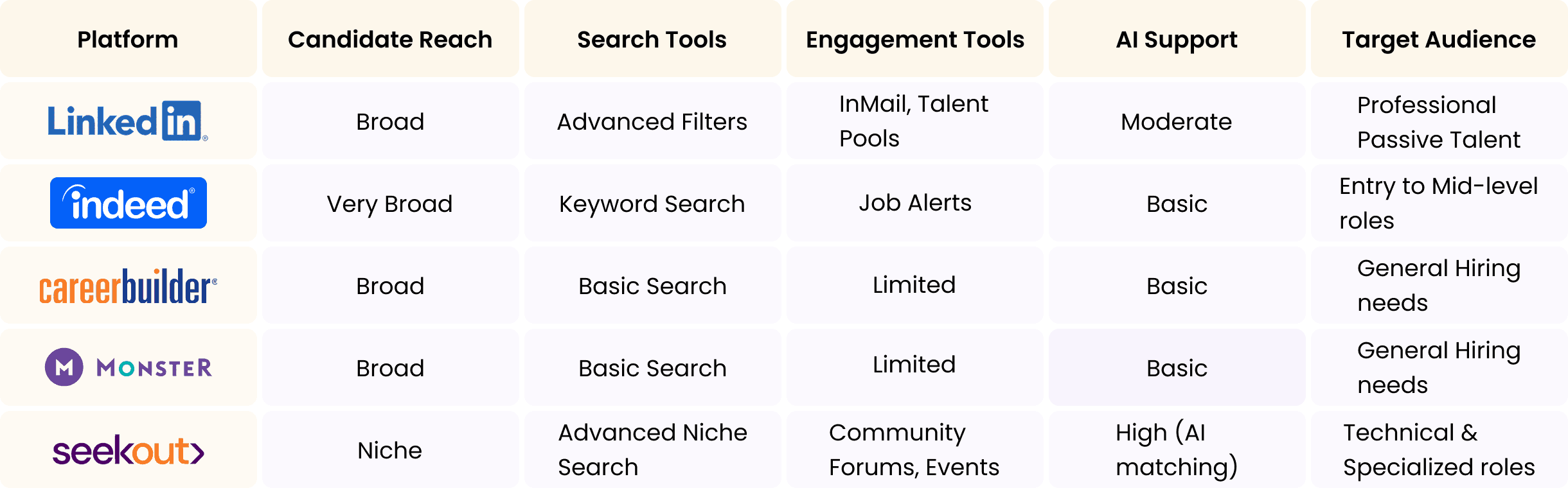
The Market Reality
From LinkedIn to Indeed to niche platforms, the market is full of tools—but not always solutions. Recruiters juggle costs, clunky interfaces, and overwhelming candidate pools.
Straight from the Source
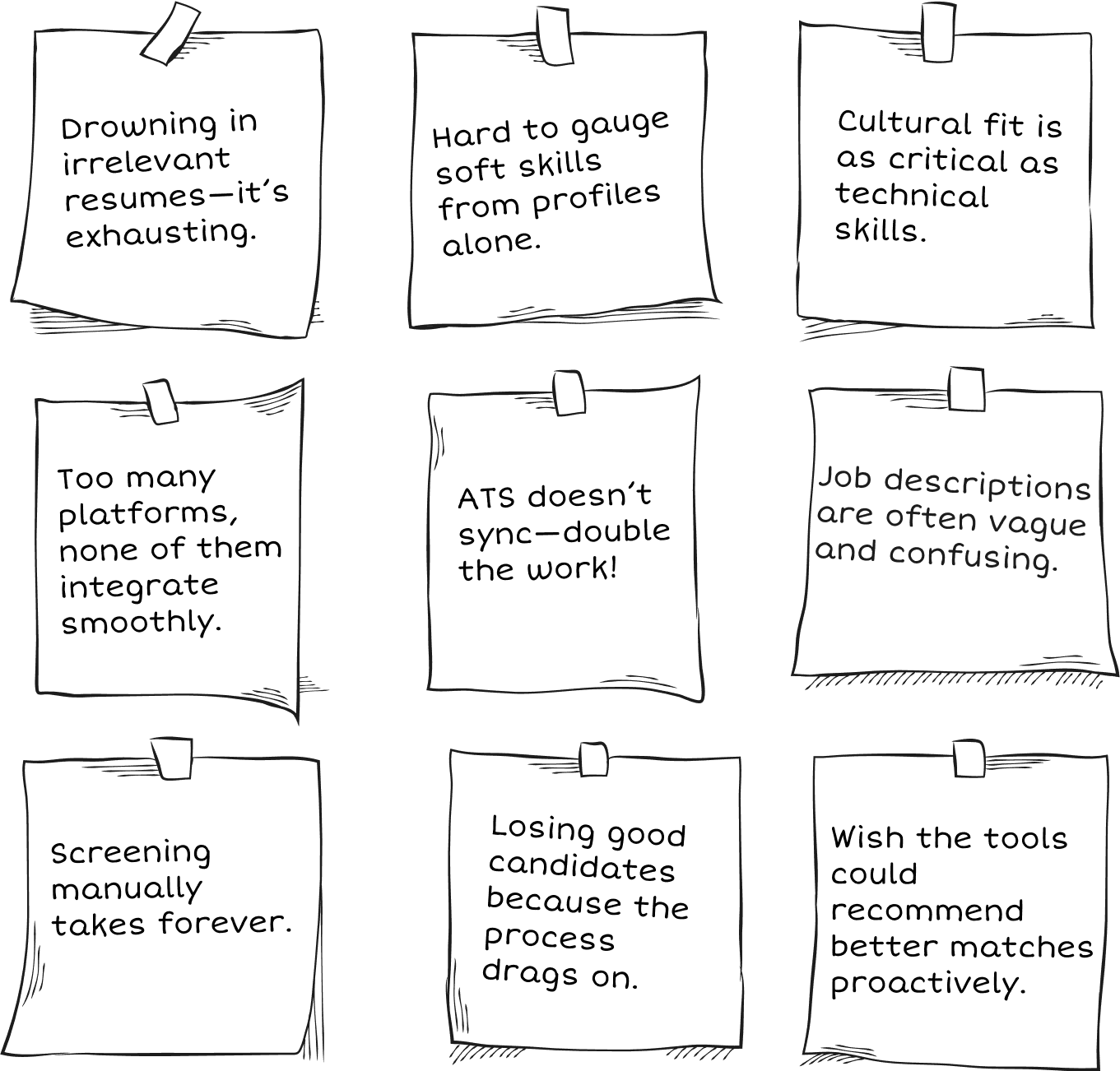
Through interviews, I uncovered recurring challenges that slowed down recruiter workflows—too many irrelevant applications, difficulty assessing soft skills and cultural fit, clunky integrations with ATS, and vague job descriptions.
Patterns That Emerged
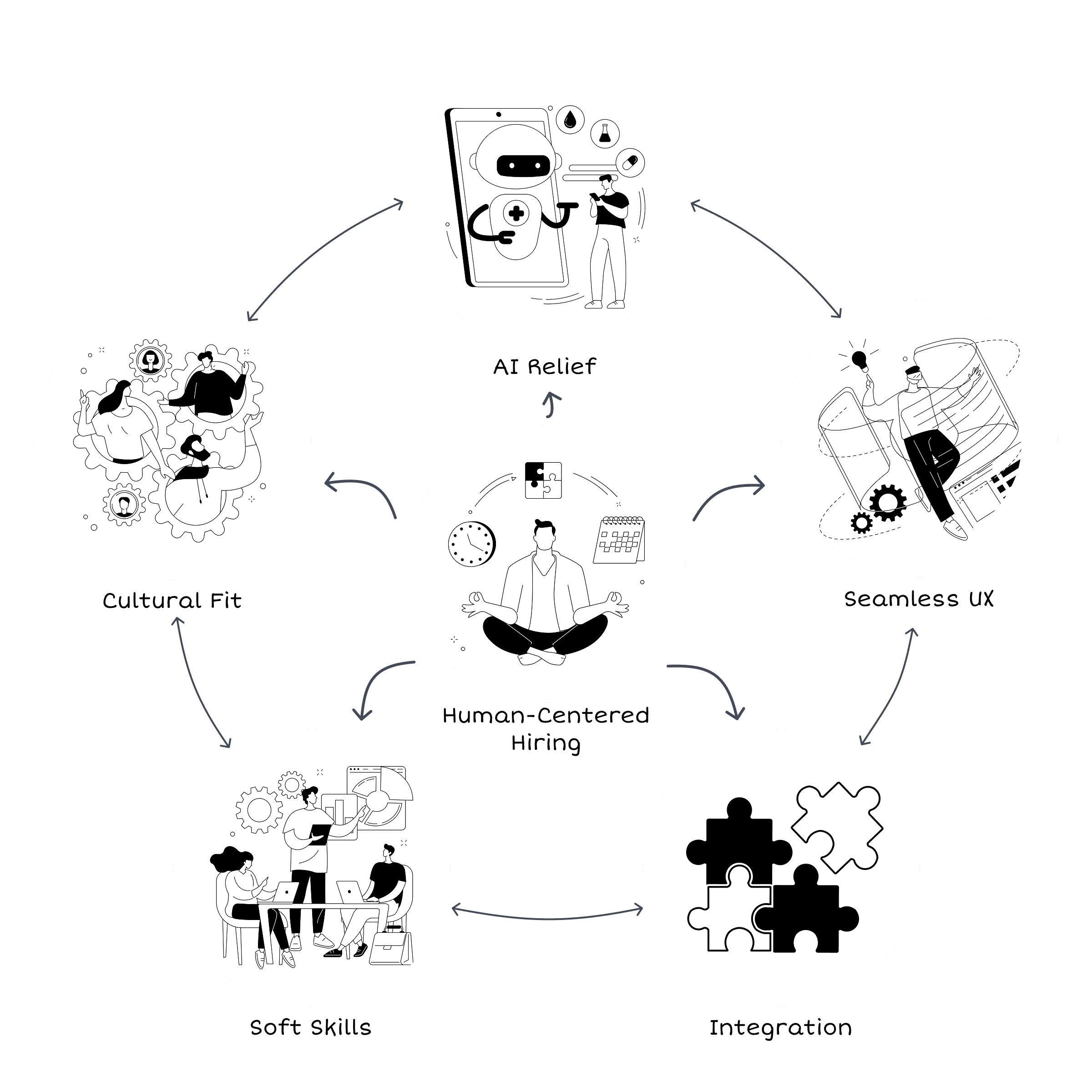
From recruiter conversations, five key themes emerged. AI was seen not as a replacement, but as relief from repetitive grunt work.
Recruiters also craved better user experiences and seamless integration, frustrated by clunky, disconnected tools.
Beyond skills, they stressed the need to evaluate soft skills and ensure a strong cultural fit—equally vital as technical ability.
Together, these insights highlight the chance to create a hiring process that is both smarter and more human-centered.
Who I Researched For…
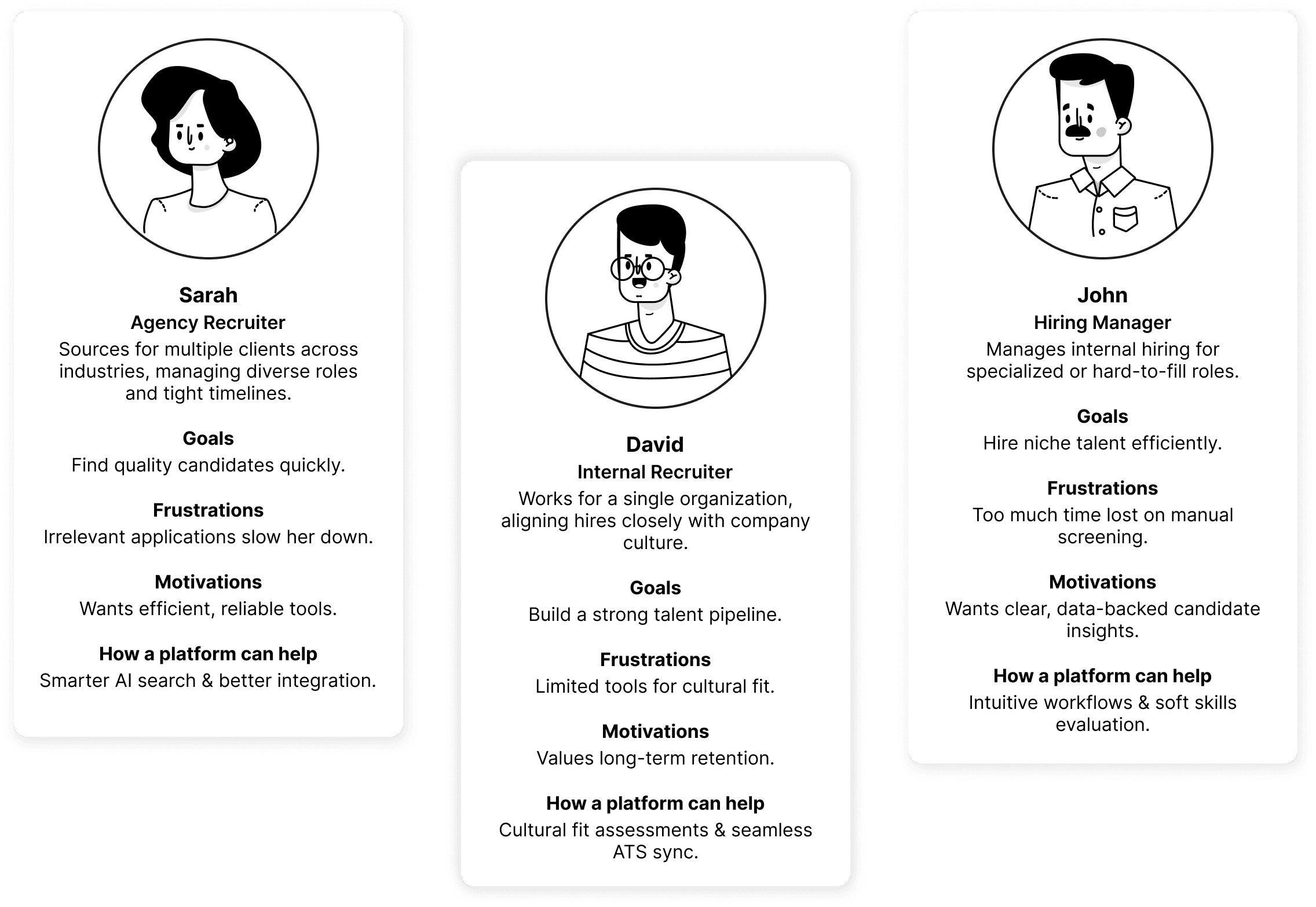
To humanize the findings, I crafted recruiter personas like Sarah (agency recruiter), David (internal recruiter), and John (hiring manager)—each driven by efficiency but slowed down by outdated tools.
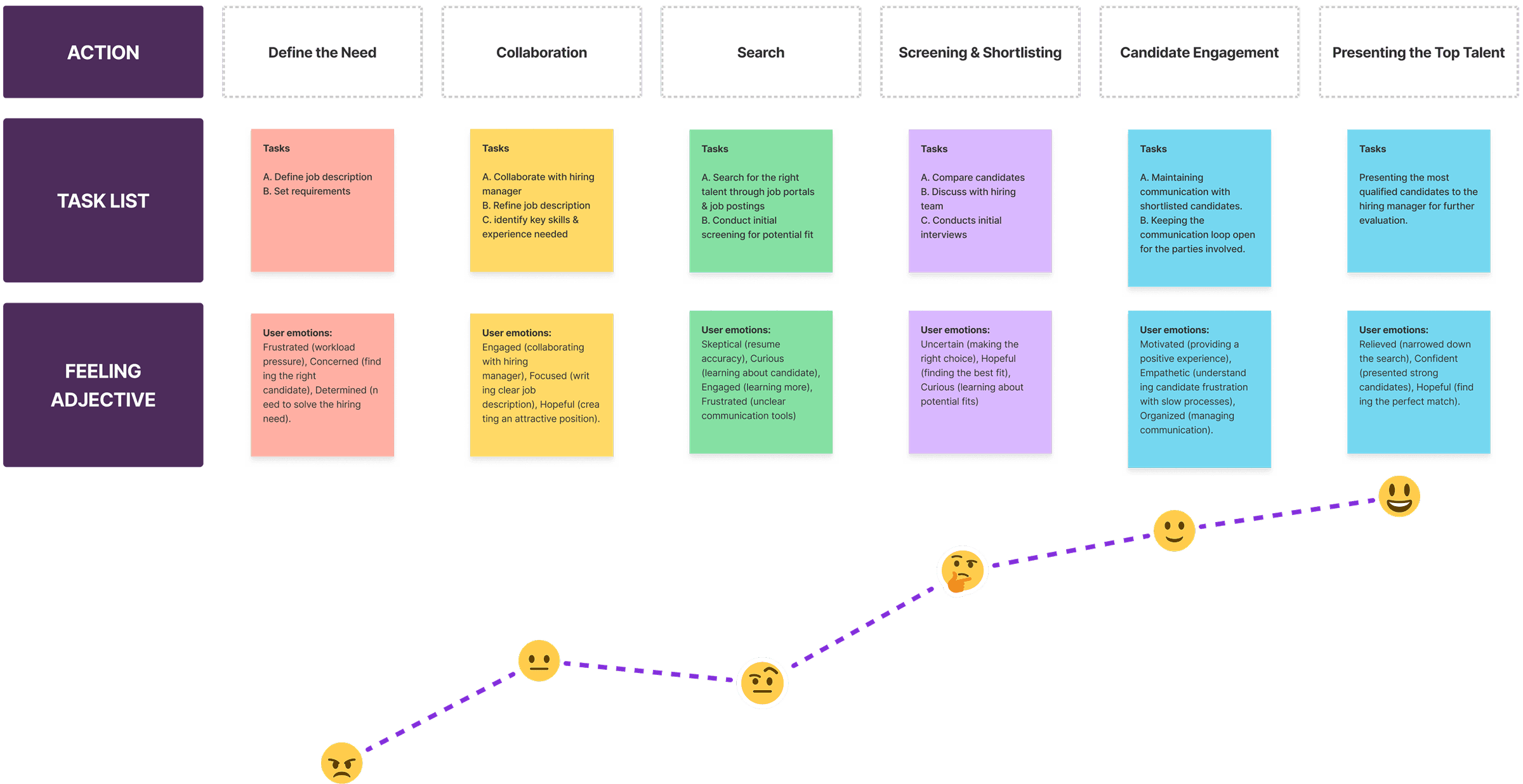
Walking in Their Shoes
I mapped the recruiter journey—from the excitement of a new role to the frustrations of sifting through irrelevant resumes. The highs and lows revealed where design could truly make a difference.
Opportunities We Saw
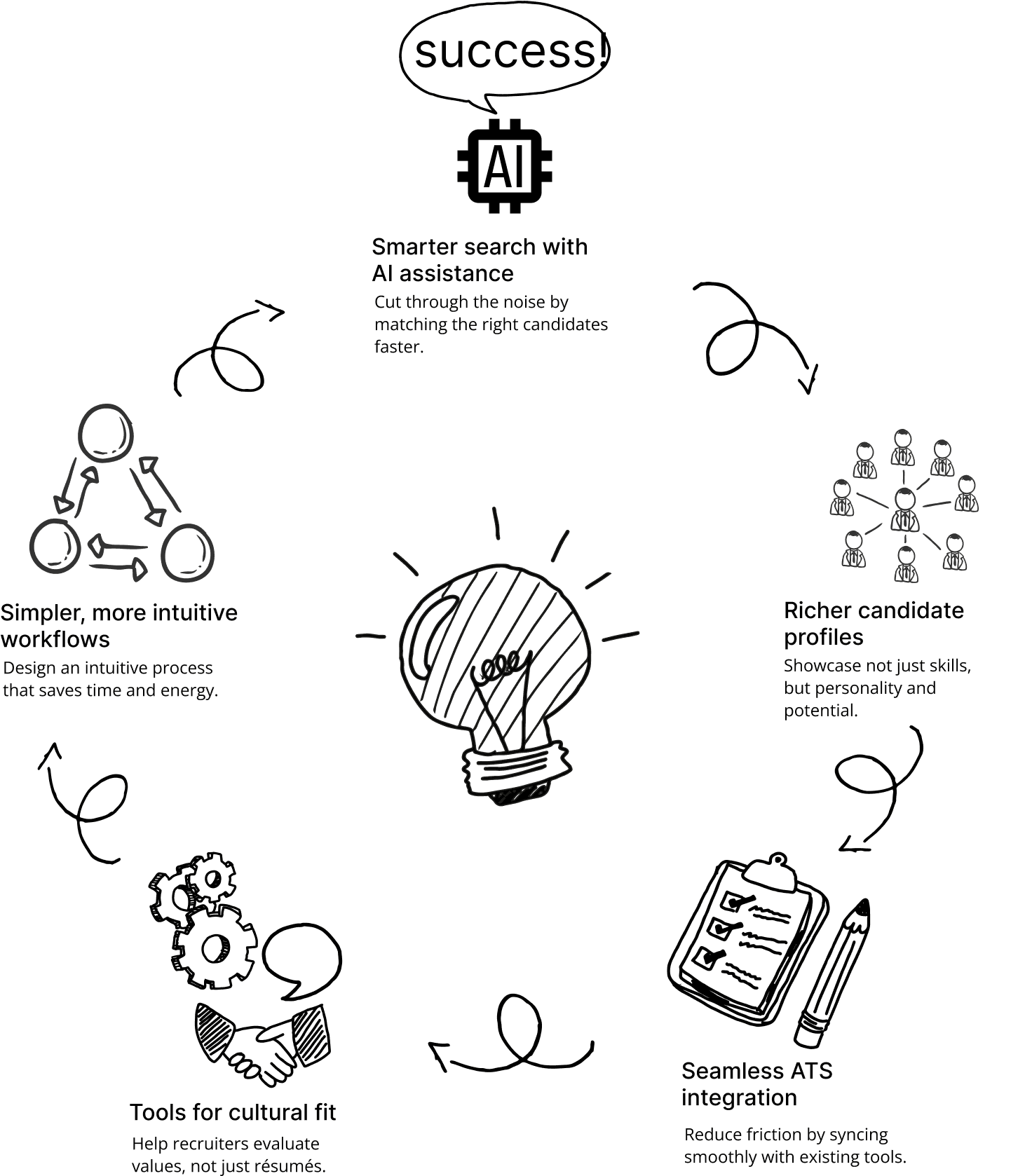
The research highlighted clear opportunities:
Smarter search with AI.
Richer candidate profiles.
Seamless ATS integration.
Platforms could spotlight values, communication style, and collaboration skills—not just resumes.
Simpler, more intuitive workflows.
Design Implications
If job portals embraced these changes, recruiters could spend less time on repetitive tasks and more on what matters: tech should augment human judgment, not replace it — helping recruiters find people who “fit the team as humans, not just as job titles".

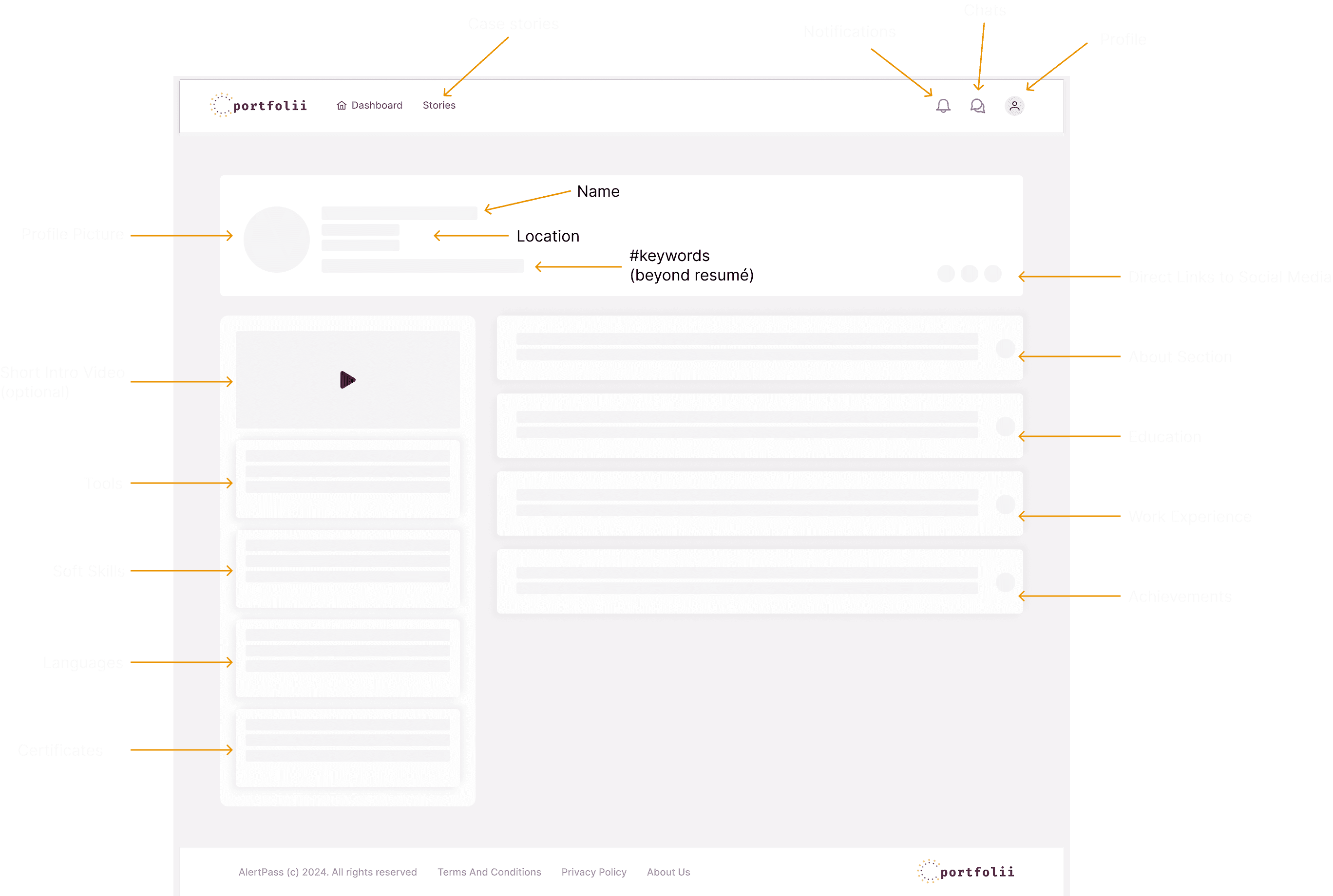
Dashboard Wireframe
Based on recruiter needs and candidate motivations, I created wireframes that prioritize clear self-presentation and efficient navigation. These layouts aim to help recruiters quickly assess skills while allowing candidates to showcase personality and fit.
Looking Back
This project wasn’t just about designing a product—it was about listening deeply and uncovering the real struggles recruiters face.
What stood out most was how often human factors like empathy, culture, and connection were overlooked in existing solutions.
The experience reminded me that design isn’t only about interfaces and features—it’s about creating systems that truly respect people’s needs.
Looking back, the biggest takeaway was clear: better hiring experiences come from balancing technology with humanity.